
TRUST, BUT VERIFY
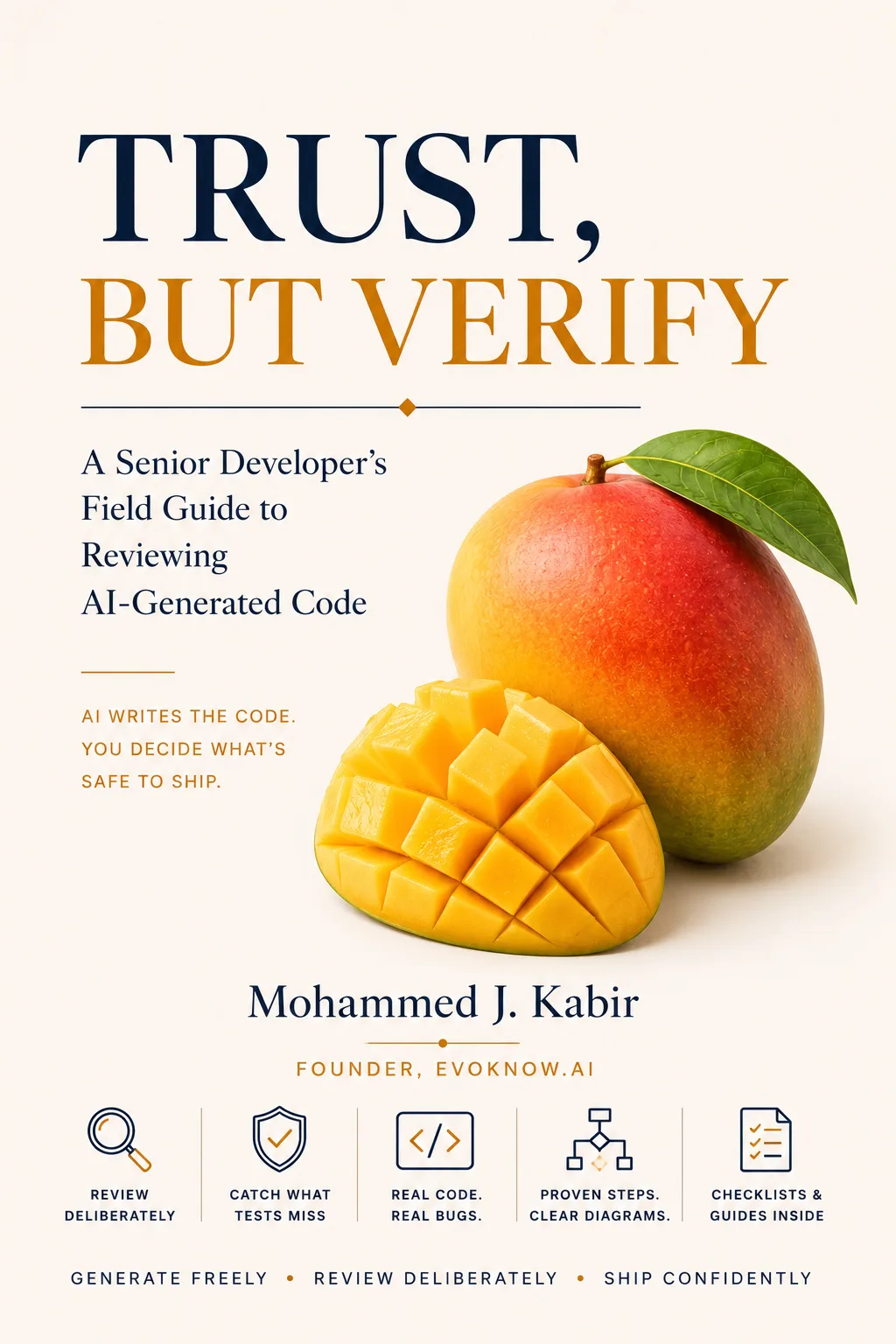
A Developer's Field Guide to Reviewing AI-Generated Code
AI can write a working feature in seconds. The code looks clean, sounds right, and most of the time it runs. But running and being safe to ship are not the same claim, and the distance between them is where your job now lives.
Reviewing AI-generated code is its own skill, and it is not the same skill as writing it. The code arrives without the thinking that should come with it: the model guessed its way there from patterns it had seen, it cannot tell you why it made the choices it made, and it sounds exactly as confident when it is wrong as when it is right. Checking that it works is not enough. You have to go through the layers underneath - which is what an experienced reviewer does almost without noticing.
This field guide turns that instinct into a method you can learn. After a short chapter on the three behaviors of generated code that drive every review habit, it walks the nine steps of a real review, in the order a senior developer actually walks them:
- Start with the problem, not the code - because AI can solve the wrong problem flawlessly.
- Question the engineering decisions the model made by pattern rather than reason.
- Read the logic, not the spelling - and probe the edges where polished code quietly breaks.
- Hunt the hidden assumptions: valid input, live services, existing records, a working network.
- Go through the security deliberately, with broken access control at the top of the list.
- Check how it behaves with real data, where a query in a loop becomes a ten-second page.
- Cut the overengineering the model imports from big-codebase examples.
- Look for the error handling it skimped on while breezing through the demo.
- Ask whether anyone - including you, six months from now - could maintain it.
Every chapter teaches through a developer facing a concrete bug, shows a second example so the idea generalizes, and leaves you with a named, reusable method. Clear black-and-white diagrams map each idea; real code examples show the flaw and the fix side by side. A one-page before-you-merge checklist and a glossary of key terms make the whole book usable at your desk on a live pull request.
The premise is simple and freeing: generate freely, review deliberately. AI writes the code. You decide what is safe to ship. Only one of those jobs got automated - and this book is about the one that didn't.
Who it's for: working backend and full-stack developers, tech leads, and reviewers who ship AI-assisted code and want to catch the bugs that pass the tests. No framework lock-in; the examples lean on common backend stacks, but every idea carries to any language.
- pdf · 3.3 MB Email to unlock
Sign in to join the discussion.